Pune
08048034256
+918087586263

Items tagged with 'thread major diameter'

6814772a5d263414004dd4a4 Card 2

product image
Thread Gauges

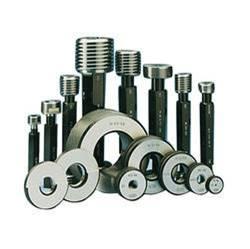
In the case of (screw/bolt) threaded parts, thread plug gauges are used in production shops where the “screws” (externally threaded parts) or the “nuts” (internally threaded parts) are to be quickly checked for inspection and approval. When you consider the metrology (the science of measurement) of threaded parts as a whole, more than a couple of thread gage types are involved; a novice in metrology can become somewhat confused with the terminology of the threaded gages in addition to how they are used. In a threaded part, several features are involved – the thread’s major diameter, minor diameter, pitch diameter, pitch (in case of metric threads) or threads per Inch (TPI in case of Standard American Equivalent (SAE) threads), flank angle, etc. Normally, a GO / NO-GO type of threaded gage will inspect a threaded part based mainly on the pitch diameter. As long as a GO gage is answered (threads properly without being forced) and a NO-GO gauge is not answered, the threaded part is deemed to be accepted and pass inspection. In some specific cases where the thread major diameter (for screws) or minor diameter (for nuts) is critical, separate, plain GO/ NOGO gages (like those used for measuring cylindrical parts) are also used in addition to a threaded gages to determine the acceptance of a threaded part. A thread plug gage is used to check acceptance of a “nut” , (an internally threaded part). For small threaded parts, the gage will be double ended, with one end carrying the GO gage and the other end, the NOGO. For larger parts, the two may be separate pieces. A thread plug gage is designed to check the pitch diameter (to the given pitch / Threads per inch). In order for the part to pass inspection and be accepted, the GO gage should pass through the entire length of the nut, without requiring the use of too much rotational force. The NOGO gage can at the best enter into the nut, checked at both ends, over not more than 2 turns. It should not go beyond this.

6814772a5d263414004dd4a4 Card 2

product image
Tread Gauges

A thread gauge is used to check the dimensions of a specific thread form angle, pitch and diameter. Plug gauges are used to check internal threads, whereas ring gauges are used to check external threads. Each gauge comprises of two parts: a GO gauge and a NO GO gauge. Both parts should be used to check the thread.

6814772a5d263414004dd4a4 Card 2

product image
PIN GAUGE

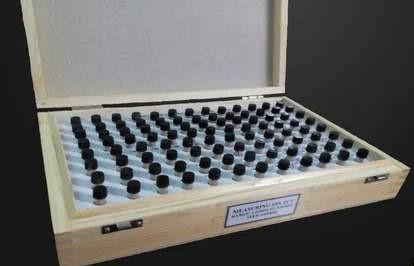
A pin gauge, also known as a pin gage, is a precision measuring tool used to measure the diameter or width of holes, slots, or other features on a workpiece. It typically consists of a set of cylindrical pins of varying diameters that are used to determine the size of a hole or opening. Here are some key facts about pin gauges: Types of Pin Gauges: 1. Standard Pin Gauge: Measures hole diameters in increments (e.g., 0.001 inches). 2. Tapered Pin Gauge: Measures tapered holes or slots. 3. Ball-Pin Gauge: Uses a ball-shaped tip to measure curved or irregular surfaces. How to Use a Pin Gauge: 1. Select the appropriate pin gauge size. 2. Insert the pin into the hole or slot until it stops. 3. Check the size marked on the pin to determine the measurement. Advantages: 1. High accuracy and precision. 2. Easy to use. 3. Inexpensive compared to other measuring tools. Common Applications: 1. Machining and manufacturing. 2. Quality control and inspection. 3. Aerospace and automotive industries.

6814772a5d263414004dd4a4 Card 2

product image
ANOLOG AIR GAUGE UNIT

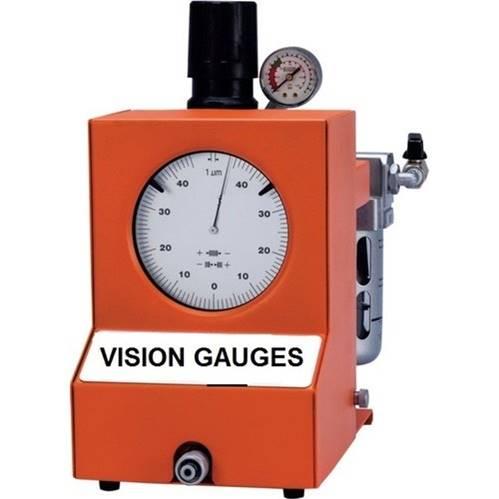
Every gauge carries a calibration certificate giving actual values Module 1A, Module 2A giving the most economical solution to your inspection needs on shop floor High pressure system: high speed of response and self cleaning of gauging area ensures accurate reading of size, taper and ovality at a time Non-contact gauging: long life due to minimal frictional wear Two setting Masters: ensures correct magnification of reading at all times System pressure check gauge: provides a constant check on the system pressure i.e. 3 bars (45 psi) regulated by a high precision regulator built into the unit Minimum line pressure required 4.5 bars (67 psi) Air consumption 46 LPM For diameter 6 mm and above Module-1A air gauge unit is to be used For diameter below 6 mm Module-2A air gauge unit is to be used

6814772a5d263414004dd4a4 Card 2

product image
Air Gauges

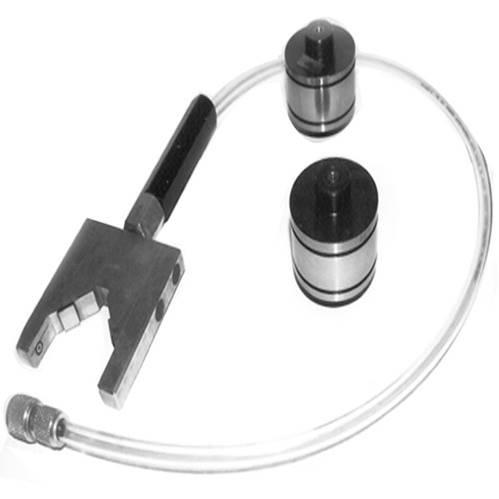
Air calipers are ideal for measuring diameters of jobs held between the centers on machine or interrupted shafts like crankshafts “V” support for perfect centering and stability ‘’V” support with tungsten carbide pads for diameter above 16 mm Ideal for collared diameters i.e. crankshaft pin and journal Multi-jet air calipers available for multi-point measurement i.e. to check crowning of crank pins and journal diameters Can be supplied bench mounted for checking small diameters or against specific needs

6814772a5d263414004dd4a4 Card 2

product image
Air Gauges

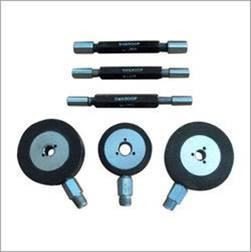
Two Jet Air Ring gauge to check outside diameter, taper & ovality Three jet Air Ring gauge for detecting tri-lobed effect for diameter above 4 mm only Can be supplied with tungsten carbide sleeve on request for checking hardened job Can be supplied with multiple jets

6814772a5d263414004dd4a4 Card 2

product image
Air Gauges

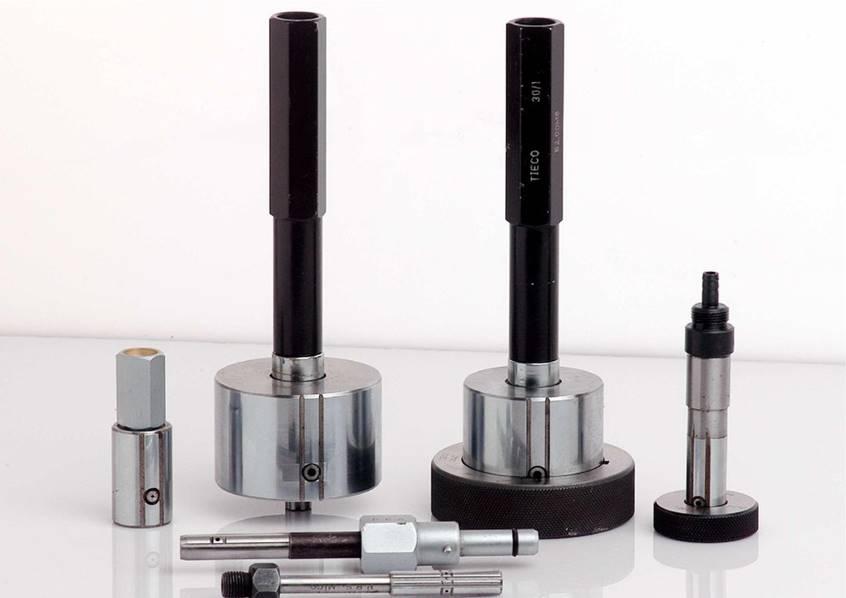
Quick and easy checking of bore Standard 2 jets for checking size, taper, ovality 3 jets at 120 degree for average size & tri-lobed effect (for diameter 6 mm & above) With extensions to check deeper bores Can be supplied to check through or blind bores Can be supplied with multiple jets Hard chrome plated for extended life Can be supplied with carbide sleeve on request For specific depth or land width checking, adjustable depth collars can be provided

Still searching for
thread major diameter?